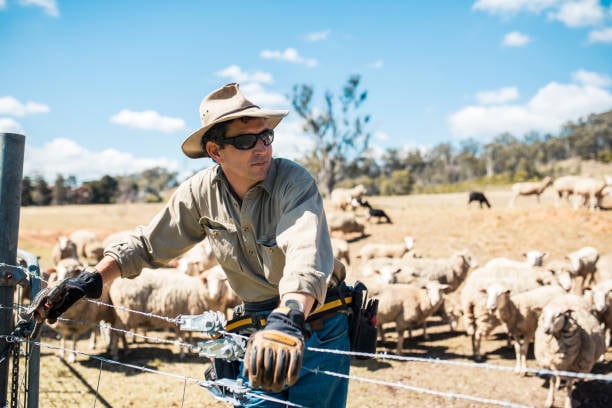
Australia’s agriculture industry is changing fast. It is still a major employer in regional areas, but the work is shifting from mostly manual labour to more skilled, tech-enabled roles in areas like agronomy, machinery, data, and supply chains.
At the same time, demand for workers is not evenly spread, some states have deep, well-developed job markets, while others are dealing with ongoing shortages driven by geography, seasonality, and an ageing workforce.
Here is a simple breakdown of where the jobs are and where skilled workers are most needed state by state.
VICTORIA – largest workforce, diverse opportunities
Victoria has the largest agriculture workforce in Australia, accounting for around 26% of national employment. Best all-round state for both job availability and career progression.
Why it leads:
- Strong dairy, horticulture, grains, and livestock industries.
- Large food processing industry (adds extra jobs off-farm).
- The Gippsland and the Murray regions are key farming and production hubs.
What it means for job seekers:
- Broadest range of roles: farm, agronomy, processing, supply chain.
- Good entry points for both entry-level and skilled workers.
- Strong demand for technical and management roles.
NEW SOUTH WALES – high volume + mixed farming systems
New South Wales sits just behind Victoria with roughly 25% of the agricultural workforce. High job volume with strong demand for experienced operators and specialists.
Key characteristics:
- Large-scale cropping, livestock, and irrigation systems.
- Heavy concentration in the Murray–Darling Basin.
- Strong regional clusters (e.g. Wagga Wagga, Griffith, Moree).
What it means for job seekers:
- Demand for farm managers, agronomists, machinery operators.
- Increasing need for water management and sustainability skills.
QUEENSLAND – seasonal demand and labour shortages
Queensland is a major contributor to national employment and part of the top three states making up ~74% of the workforce. High demand, especially for seasonal workers and supervisors, but less stable year-round employment.
Key characteristics:
- Horticulture (fruit, vegetables).
- Sugar, beef, and cotton.
- Heavy reliance on seasonal and migrant labour.
- Frequent labour shortages during harvest periods.
- Hotspot regions are Bundaberg, Burdekin, Tully, Central Highlands.
WESTERN AUSTRALIA– strong demand for skilled workers
WA has fewer workers overall but a high demand for skilled labour, particularly in broadacre cropping (wheatbelt) and livestock and pastoral operations. One of the best states for high-paying technical roles, especially in machinery, agronomy, and precision ag.
Key characteristics:
- Large-scale, highly mechanised farms.
- Geographic isolation → chronic skills shortages.
SOUTH AUSTRALIA – smaller market, pockets of growth
South Australia has a smaller workforce, but strong niche industries in wine production (including Barossa Valley and McLaren Vale), as well as grains and livestock. Recent indicators show growing hiring intentions across food production and regional supply chain industries, although this is still coming from a relatively smaller base. Overall, while job volumes are more limited, there are solid opportunities in specialised and high-value sectors.
TASMANIA – high intensity, niche demand
Tasmania has a smaller workforce but is strong in horticulture, dairy, and aquaculture, with ongoing demand for skilled and technical workers such as aquaculture technicians, dairy farm managers, horticulture supervisors, and irrigation specialists. While there are fewer jobs overall compared to larger states, demand is steady and consistent, particularly for workers with specialist skills.
NORTHERN TERRITORY & ACT – very limited employment base
These regions have the lowest levels of agricultural employment nationally and are not major job markets overall. Opportunities are generally confined to highly specific positions, such as work on pastoral stations in Northern Territory, or niche roles in the ACT, including research, policy, and agribusiness-related positions linked to government and industry bodies, rather than broad-based employment across the sector.
These regional differences highlight a broader reality across Australia’s agricultural workforce, opportunities are not evenly distributed, and competition for roles can be high. While demand exists, particularly for skilled and experienced professionals, employers are often selective and the overall market remains tight. Understanding where the strongest job markets are, and how your skills align with current demand, is critical to navigating the sector effectively.
Sources:
Agriculture Victoria
Trends in the Australian Agricultural Workforce, DAFF